Screw Feeding
Enclosed Φ165 conveyors move powder with wear-resistant manganese-steel flights and reduce manual handling.
Integrated putty powder production
A compact, dust-controlled production line engineered for consistent wall putty, tile adhesive and formulated dry mortar.
Built on Guilin manufacturing
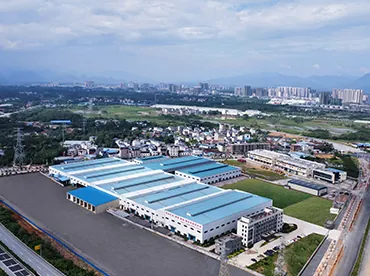
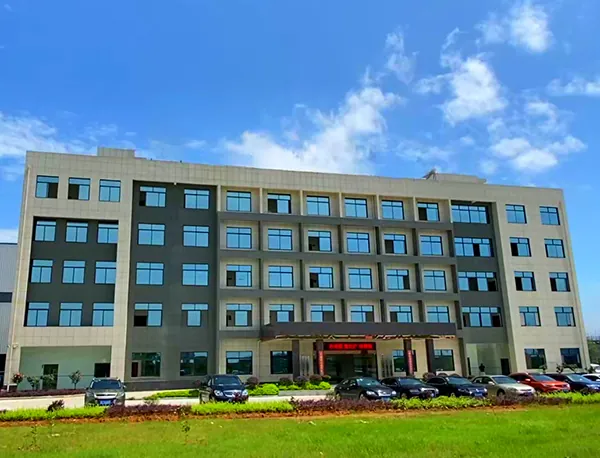
Shanghai Cronus Machinery Co., Ltd. is a wholly owned subsidiary of Guilin Mining Machinery Co., Ltd. The parent company was founded in 1973 and grew from a long-established machinery manufacturer into a specialist in powder processing and production-line engineering.
For international projects, Cronus combines application consultation in Shanghai with manufacturing, testing and technical support from the Guilin production base. Customers receive one accountable team from formula discussion through installation and commissioning.
Complete equipment package
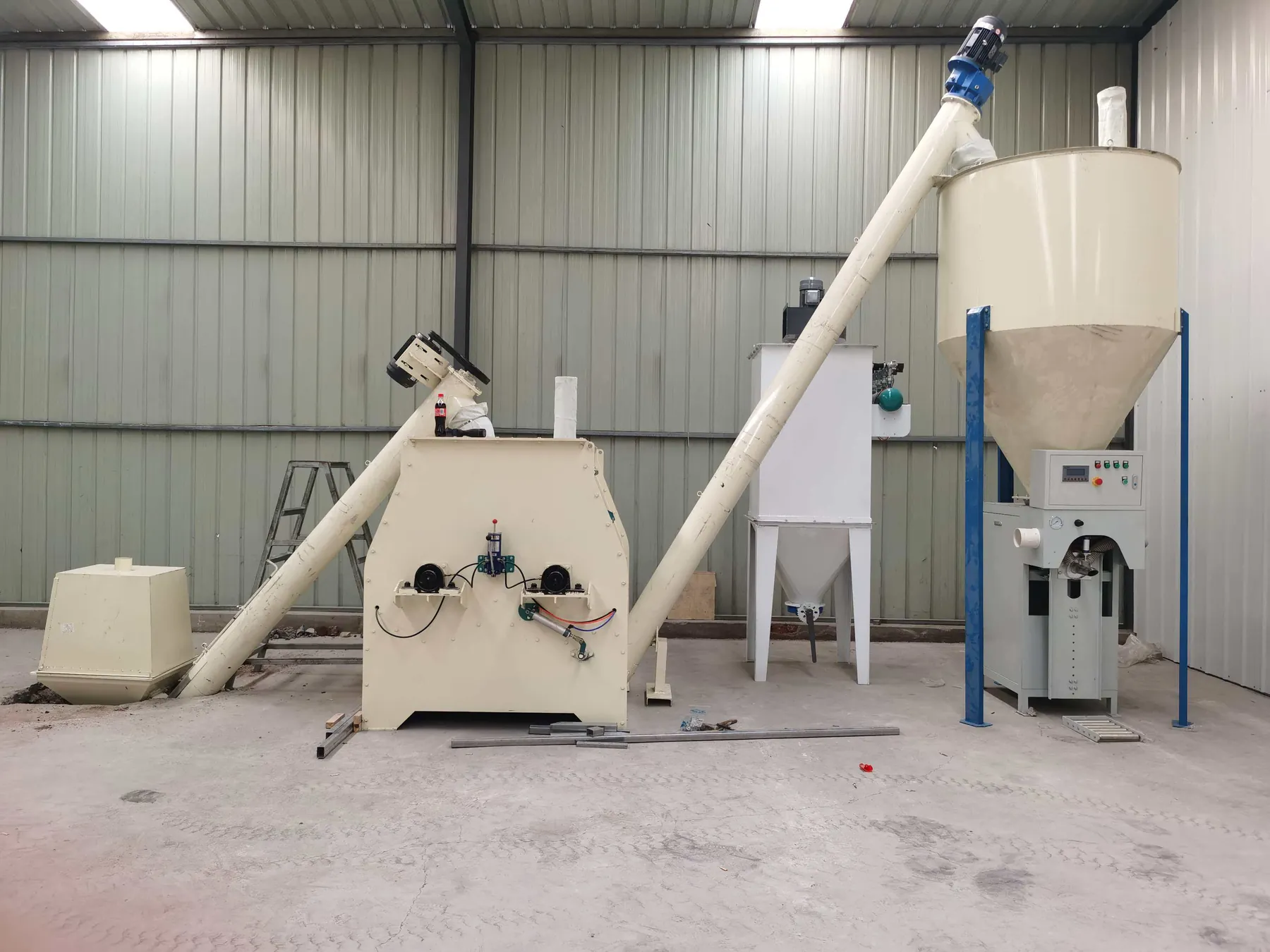
The reference line integrates the main process units required for a practical putty powder plant. Each module can be adjusted to the recipe, target output, bag size and available factory space.
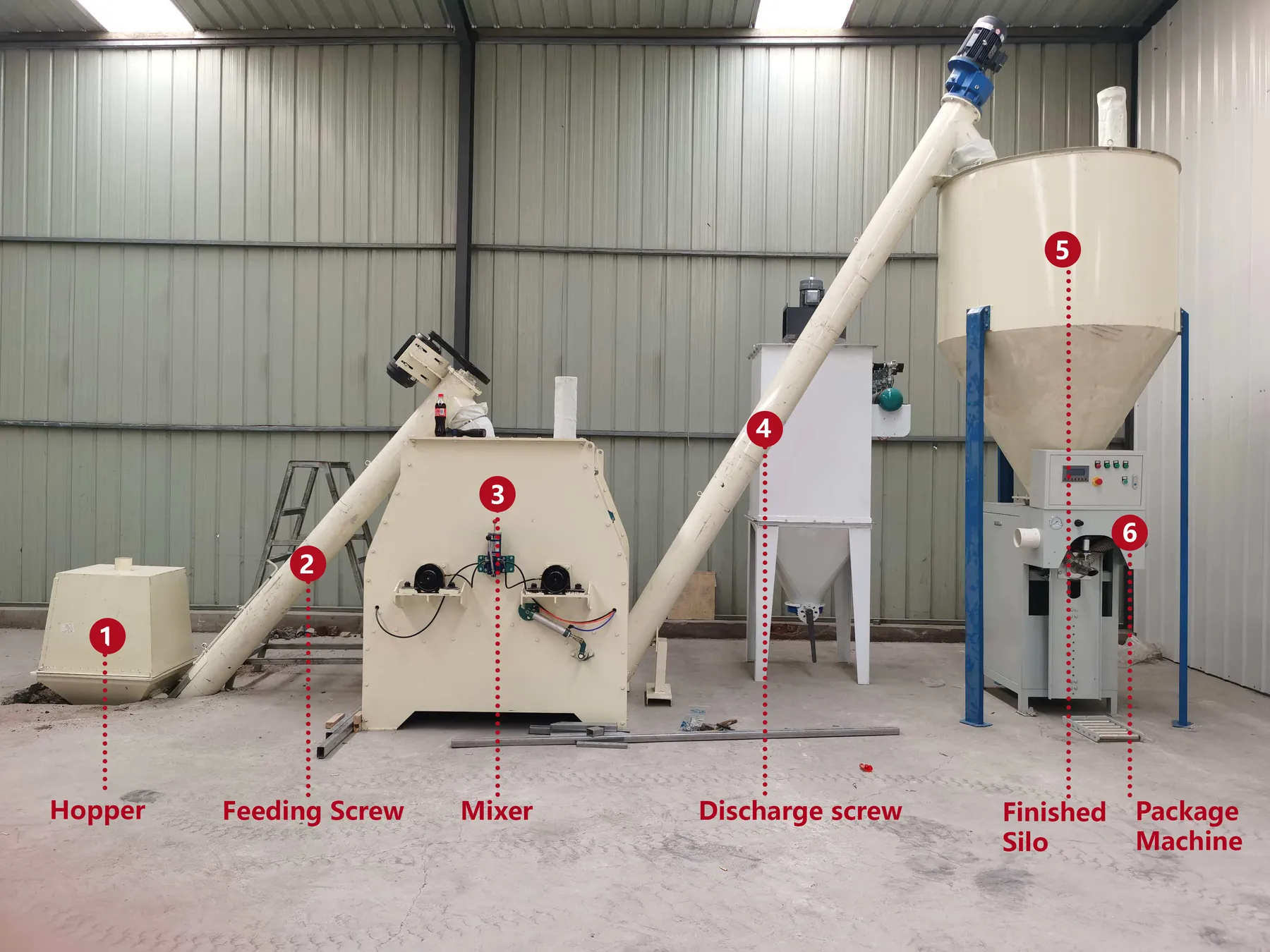
Enclosed Φ165 conveyors move powder with wear-resistant manganese-steel flights and reduce manual handling.
A single-shaft horizontal rotor lifts and crosses the material repeatedly, building a fast three-dimensional mixing zone.
A fast butterfly valve releases each batch into a finished-product hopper so mixing and packing can work in sequence.
An impeller packing unit, local extraction points and pulse filter keep the work area cleaner and recover valuable powder.
Working principle
Dry ingredients are proportioned, transferred and mixed in batches. The line isolates powder transfer and discharge points, then sends finished material to packing without interrupting the next mixing cycle.
Base powder and fillers enter through the enclosed conveyor.
Ingredients are added according to the approved formulation.
Rotor blades create opposing convection and diffusion zones.
The pneumatic butterfly valve releases the uniform batch quickly.
The finished-product hopper decouples mixing from packing.
Powder is filled into bags while pulse filtration captures dust.
Why the mixer works
The rotor does not rely on long tumbling time. Angled mixing elements push part of the batch outward and part inward while also lifting material into a temporary low-gravity zone. Fine additives disperse through the moving bulk rather than remaining in dead corners.
Cronus line advantages
Coordinated feeding, mixing and discharge reduce variation caused by manual transfer.
Vertical material flow and modular conveyors fit workshops where floor area is limited.
Enclosures, pickup points and pulse filtration help control airborne powder at key operations.
Thickened mixer plates and manganese-steel screw flights are specified at high-contact areas.
Inspection access, standard pneumatic parts and a clear line layout simplify routine maintenance.
Manual, semi-automatic or PLC-based controls can be selected to match labor and recipe needs.
Applications & materials
The line is intended for free-flowing or moderately cohesive dry ingredients. Formula trials and material data should be reviewed before final equipment selection.
Typical raw materials: cement, gypsum, calcium carbonate, quartz sand, fly ash, redispersible polymer powder, cellulose ether and mineral fillers.
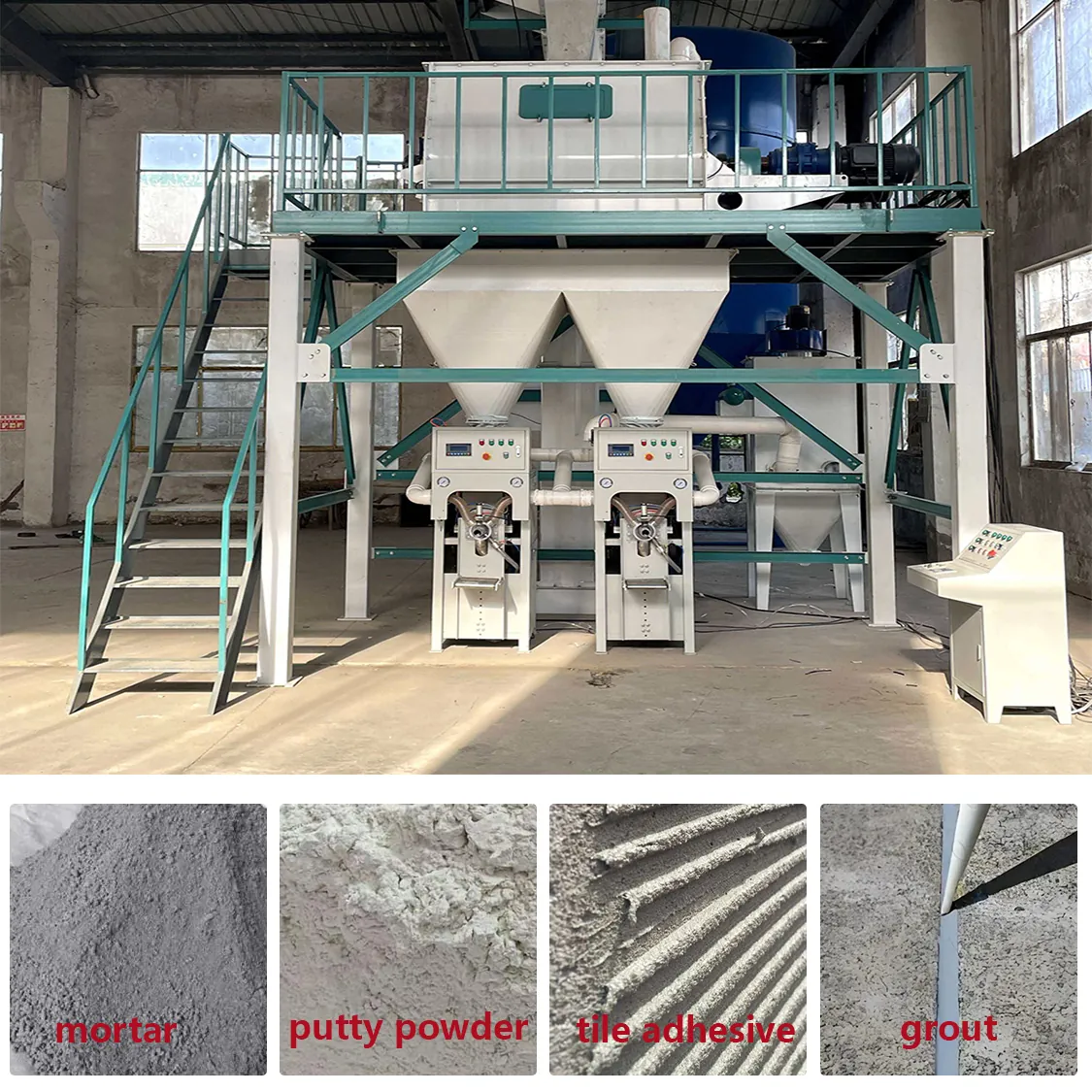
Workshop-proven layouts
From compact workshop units to tower-style lines, Cronus adjusts the equipment arrangement around site height, ingredient handling, bagging method and future expansion.
See the machine in motion
Machine videos help our engineers confirm feeding behavior, discharge speed and the right workshop layout with your team before an order is finalized.
Discuss your material and capacityReference configuration
Data below is summarized from the supplied project quotation. It is a reference package, not a universal guarantee. Final data is confirmed after material and site review.
| System | Equipment | Reference specification | Qty. |
|---|---|---|---|
| Feeding | Screw conveyor | Φ165; 5 mm casing; wear-resistant manganese-steel flight | 1 |
| Feeding drive | Belt-drive motor | 4 kW | 1 |
| Mixing | Single-shaft weightless mixer | 1.3 m³; 10 mm end plate; 5 mm side plate | 1 |
| Mixer drive | Integrated cycloidal geared motor | 7.5 kW | 1 |
| Discharge | Butterfly valve | DN200 with 50 × 300 pneumatic cylinder | 1 |
| Finished product | Screw conveyor + storage hopper | Φ165 conveyor, 4 kW; 1 m³ hopper with 3 mm plate | 1 set |
| Packing | Impeller packing machine | DN300 pneumatic butterfly valve; sensor-controlled filling | 1 set |
| Dust control | Pulse dust collector | 16 filter bags; 3 mm housing plate | 1 |
| Control | Electrical control system | Touchscreen HMI; contactor, relay, breaker and overload protection | 1 set |
| Utilities | Compressed air | 0.7 m³ reference air-compressor capacity; final demand to be checked | By project |
Equipment selection guide
The best mixer is the one matched to your formulation and production workflow. This comparison shows where the Cronus reference line delivers practical value for putty powder manufacturing.
Wear parts & spares
Cronus supplies original-fit spares backed by drawings and manufacturing records. Parent-company foundry and machining resources support dimensional consistency, practical pricing and faster matching than unknown aftermarket parts.
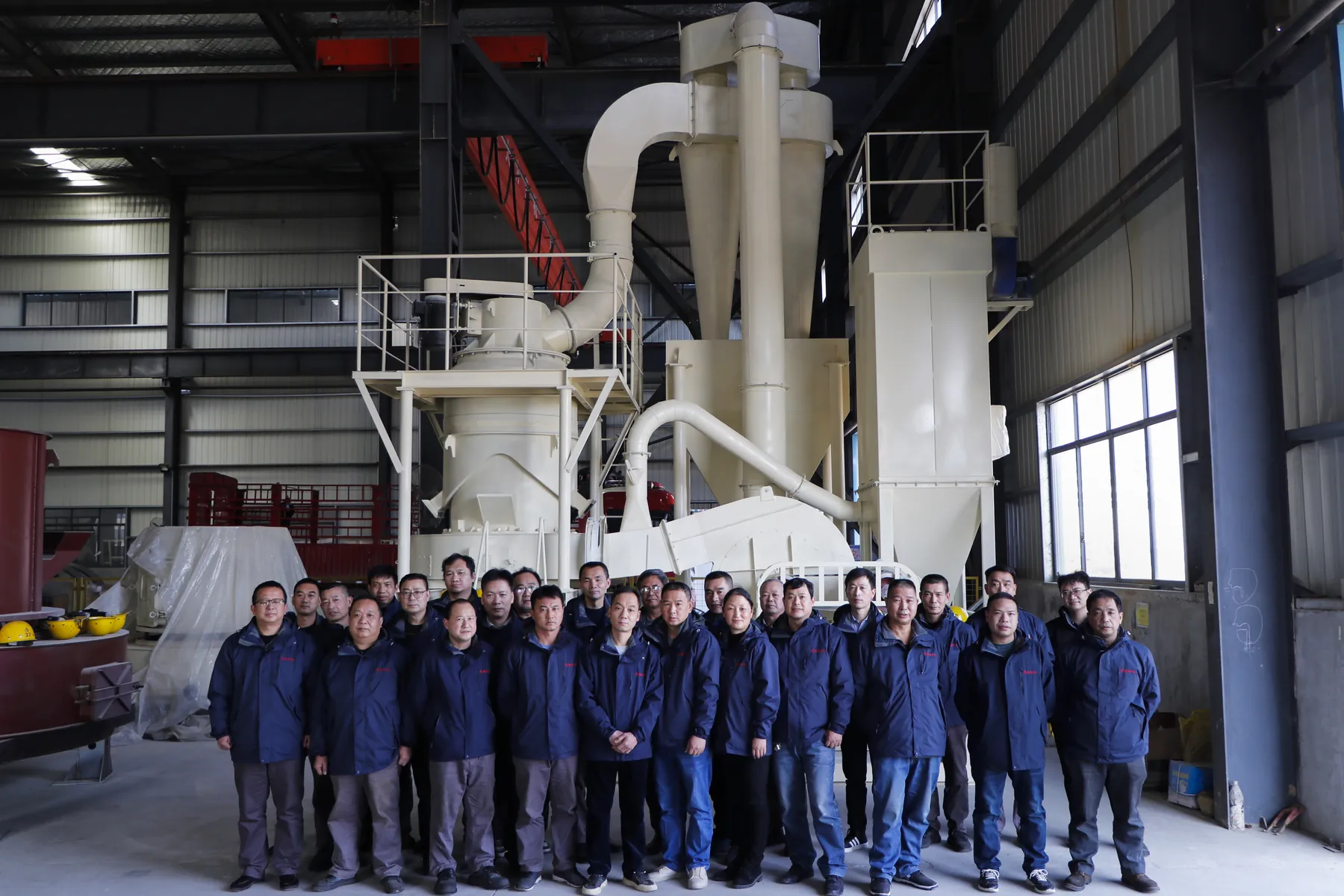
Manufacturing credibility
Guilin Mining Machinery has received high-tech enterprise recognition and maintains certified management systems. Its equipment portfolio is supported by patents and long-term manufacturing records.
Lifecycle support
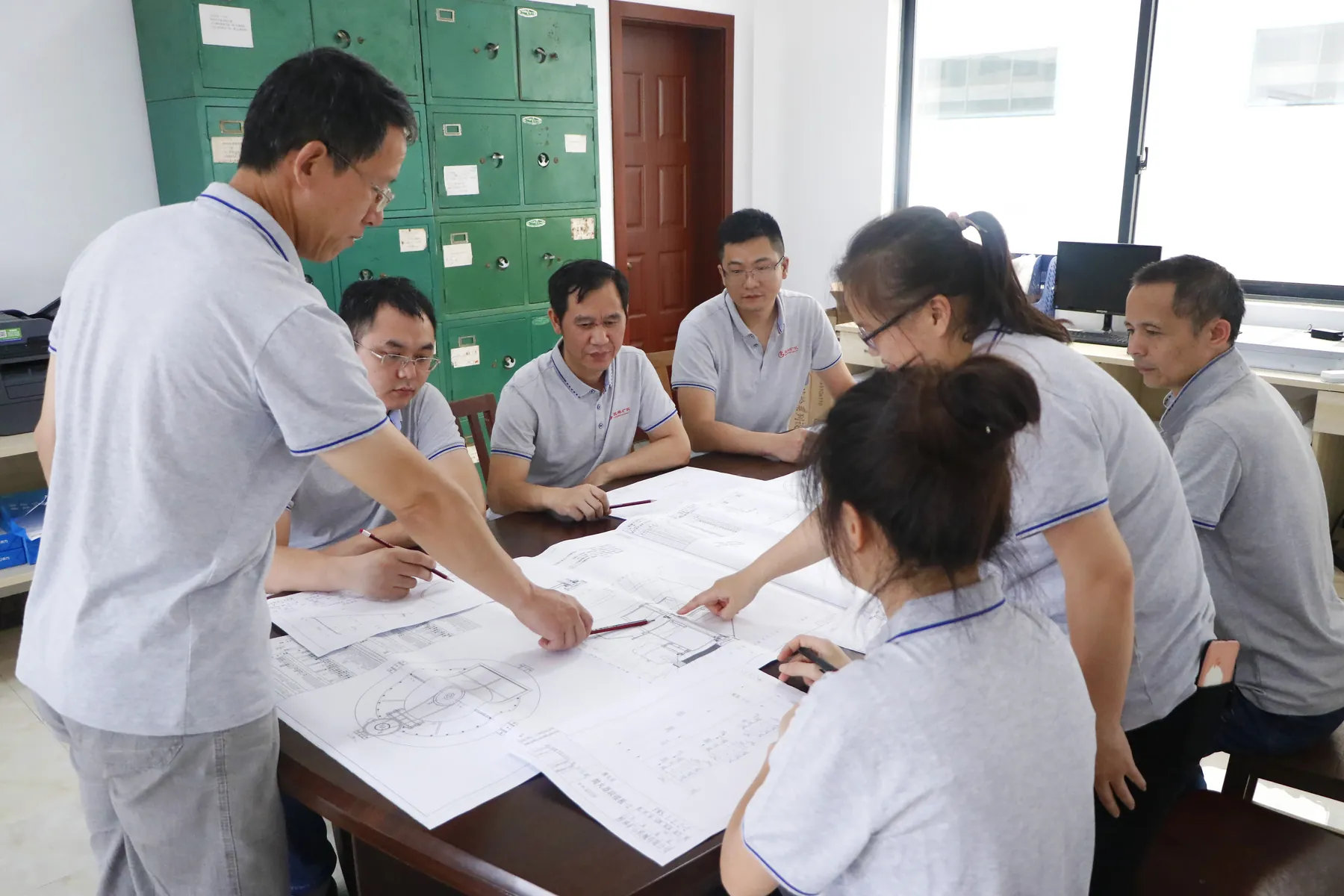
Our team connects material review, layout design, manufacturing, commissioning and maintenance planning so the equipment delivered is practical for the customer’s factory.
Formula, material bulk density, moisture, abrasiveness, capacity, bag size and local standards.
Process diagram, equipment list, plant arrangement, utilities and foundation information.
Fabrication checks, no-load trial, documentation and recommended commissioning spares.
Remote or on-site guidance, electrical checks, pneumatic setup and operator training.
Parameter optimization, maintenance schedule, fault diagnosis and original spare parts.
Frequently asked questions
Send the formula range, required output and factory dimensions for an engineered recommendation.
Ask an EngineerIt can be configured for wall putty, tile adhesive, masonry mortar, repair mortar, skim coat, gypsum plaster and other premixed dry powders. The exact mixer, dosing and packing method depends on the formula.
The documented 1.3 m³ single-shaft line is designed for approximately 2 t/h. Actual output depends on bulk density, batch loading, mixing time, feeding speed and packing speed.
Angled rotor elements move materials in opposing axial and radial directions while lifting part of the batch. This produces rapid convection and diffusion through the chamber for uniform dry blending.
Cycle time is formulation-specific. It includes feeding, dry mixing and discharge, so Cronus confirms the operating cycle after reviewing the raw materials and additive percentage.
Yes, provided the dosing accuracy, addition sequence and minimum inclusion rate are properly engineered. For very low-dose ingredients, a premix step may be recommended.
Yes. The system can be supplied with manual feeding, semi-automatic controls or automatic weighing and recipe management, depending on capacity, number of ingredients and budget.
Please provide the product formula or main raw materials, target output, bulk density if known, bag weight, local voltage/frequency, factory dimensions and desired automation level.
Enclosed transfer points and extraction hoods connect to a pulse dust collector. The reference line uses a 16-bag collector; airflow and filter area are recalculated for larger systems.
Motors and control components can be selected for the destination voltage and frequency. Share the site power standard before the order is confirmed.
That depends on whether the line uses a compact horizontal layout or a vertical tower. Cronus prepares a layout drawing after receiving the building length, width, clear height and column positions.
Mixer blades and seals, screw flights, packing impellers, filter bags and pneumatic seals should be inspected routinely. Abrasive sand formulations generally increase wear.
Yes. Foundation information and installation guidance are provided. Remote support or on-site commissioning can be arranged according to the project scope and destination.
Use the inspection access and bottom discharge to remove residue, following the lockout procedure. The required cleaning method depends on color change, additive compatibility and contamination limits.
Start with your formula
Tell us what you plan to produce, the target output and your local power supply. An engineer will help define the mixer, conveying, packing and dust-control scope.